Put Down the Spreadsheet: A Casual Gamer's Manifesto for Actually Having Fun Again
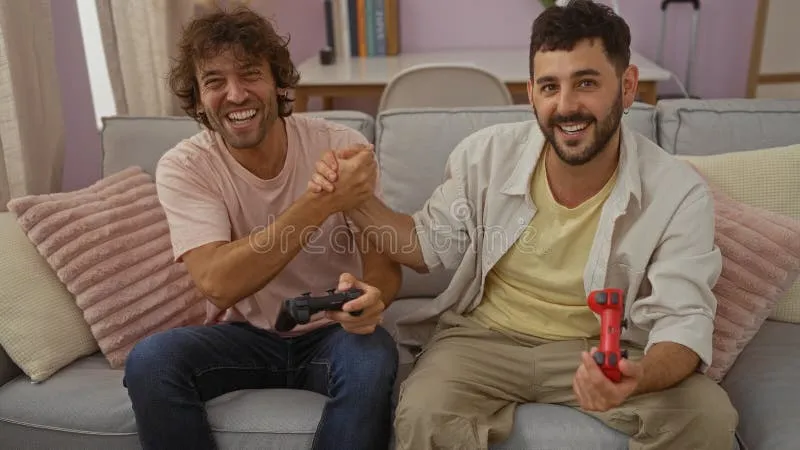
Photo: relaxed person playing video games on couch laughing carefree, via thumbs.dreamstime.com
I want to tell you about the moment I realized I had a problem.
It was a Tuesday night. I had forty-five minutes before I needed to sleep like a responsible adult. I booted up a game I'd been looking forward to all week — a cozy little indie title about running a café. Adorable art style. Chill music. Zero stakes. The whole thing was basically a digital hug.
Twenty minutes in, I had three browser tabs open. One was a wiki. One was a Reddit thread titled "OPTIMAL café layout for max gold per hour." The third was a YouTube video called "Everything You're Doing Wrong in [Cozy Café Game]."
I was not relaxed. I was not having fun. I was optimizing a fake coffee shop at 10:30 on a Tuesday and somehow making it stressful.
If any part of that sounds familiar, welcome. You might be a tryhard in a casual gamer's body — and the good news is, there's a way back.
The Tryhard Burnout Is Real (And It's Not Your Fault)
Here's something the gaming industry doesn't exactly advertise: a lot of modern game design is engineered to make you feel like you're behind. Daily login bonuses that punish you for skipping a day. Battle passes with 80 tiers. Season events with a 72-hour window. These systems are built to trigger the same anxiety loops that make social media so sticky.
When you're constantly chasing completion, optimization, and efficiency, you stop playing the game and start processing it. You're not exploring a world — you're checking boxes. And the human brain, bless it, is very bad at staying joyful while checking boxes.
Psychologists call the mental state of genuine play "flow" — that zone where a challenge is just hard enough to keep you engaged without tipping into frustration or boredom. The researcher Mihaly Csikszentmihalyi (yes, that's a real name, yes it's pronounced roughly like "Me-high Cheeks-sent-me-high") spent decades studying flow states and found that they're most accessible when we're intrinsically motivated — doing something for the love of it, not for external reward.
In other words: the moment you start gaming for the achievement rather than the experience, you've accidentally turned your hobby into unpaid labor.
Signs You've Got Tryhard Burnout
Let's do a quick self-assessment. You might be experiencing tryhard burnout if:
- You haven't finished a game in months because you keep restarting to "do it right"
- You feel guilty logging off before hitting a daily objective
- Games you used to love now feel like chores
- You've described your gaming session as "grinding" more than once this week
- You're watching YouTube guides for a game before you've actually played it
- You've rage-quit a game that was, by any objective measure, not worth raging over
If you checked three or more of those, this article is your intervention. A fun one, though. We're not here to judge — we're here because we've been there too.
The Permission Slip You Didn't Know You Needed
Somewhere along the way, "casual gamer" became almost a pejorative. Like it meant you weren't serious, weren't committed, weren't real. The gaming culture around skill and optimization can be genuinely inspiring — watching someone master a difficult game is legitimately impressive — but it has a shadow side that convinces everyone they need to be performing at that level all the time.
You don't.
You are allowed to play a game on easy mode. You are allowed to skip the collectibles. You are allowed to use a guide when you're stuck and not feel like you've cheated yourself out of something. You are allowed to play for thirty minutes, make zero progress toward any measurable goal, and call it a good night because it felt nice.
This is not a controversial stance. This is just remembering what games were before the internet turned everything into a leaderboard.
Practical Strategies for Reclaiming Your Joy
Delete the Wikis (At Least for the First Playthrough)
Go in blind. Let yourself be surprised. Let yourself be lost. Getting stuck and figuring something out on your own produces a satisfaction that no amount of pre-optimized knowledge can replicate. You'll have a messier run. You'll miss things. And you'll have a story to tell — "I had no idea what I was doing and it was great" is a way better story than "I followed the guide exactly."
Play Something With No Stakes
Not everything needs to be a live service game with seasonal content and a competitive ladder. Sometimes the move is a short, complete, standalone experience with a beginning, middle, and end. Games like A Short Hike, Unpacking, Firewatch, or Alba: A Wildlife Adventure are designed to be finished and enjoyed, not optimized and extended forever. They remember that games can be complete thoughts.
Set a "No Objectives" Session Once a Week
Pick one gaming session per week where you explicitly have no goal. No quest to finish. No level to hit. You're just wandering. In open-world games this can feel almost meditative. In sandbox games it becomes creative. In multiplayer games it means playing with the explicit goal of being silly rather than winning. It sounds counterintuitive but giving yourself permission to be unproductive is genuinely restorative.
Find a Game Buddy Who Matches Your Energy
Playing with someone who's obsessively competitive when you're trying to decompress is a recipe for friction. Find a friend, family member, or online pal who wants the same thing out of a session that you do. Playing through a story game with someone who gasps at plot twists and forgets to collect the optional stuff is a completely different — and often better — experience than solo optimizing.
Take Actual Breaks
This sounds obvious and yet. If you're burned out, sometimes the answer is just to not play for a week. Come back when you miss it, not when the daily login bonus is about to reset. Missing a day in a live service game will not destroy your progress in any meaningful way. Your relationship with gaming is more important than your battle pass tier.
Games That Remember What Fun Feels Like
If you need a starting point for your re-entry into joyful play, here's a shortlist of titles that tend to rekindle the spark:
- Stardew Valley — A farm sim that rewards chill consistency over efficiency
- Untitled Goose Game — You are a horrible goose. That's it. That's the game. It's perfect.
- Katamari Damacy Reroll — Absurd, colorful, and impossible to take seriously
- Chicory: A Colorful Tale — Gentle, emotionally resonant, and actively supportive of playing at your own pace
- Nidhogg 2 — Ridiculous local multiplayer that's more about laughing than winning
- PowerWash Simulator — Deeply, inexplicably satisfying in a way that asks nothing of you
The Whole Point Was Always the Fun
Gaming culture has a tendency to eat its own tail — to take something made for joy and load it up with enough systems, expectations, and social pressure that the joy becomes the hardest thing to find. You're not wrong for feeling tired of it.
But the fun isn't gone. It's just buried under a bunch of stuff that got piled on top of it. Sweep that away — the guides, the optimization, the guilt about not playing "correctly" — and you'll find it right where you left it.
You started playing games because something about them clicked. Because they were fun. That version of you knew what they were doing. Trust them a little more.