Your Games Are Whispering and You're Missing Every Word
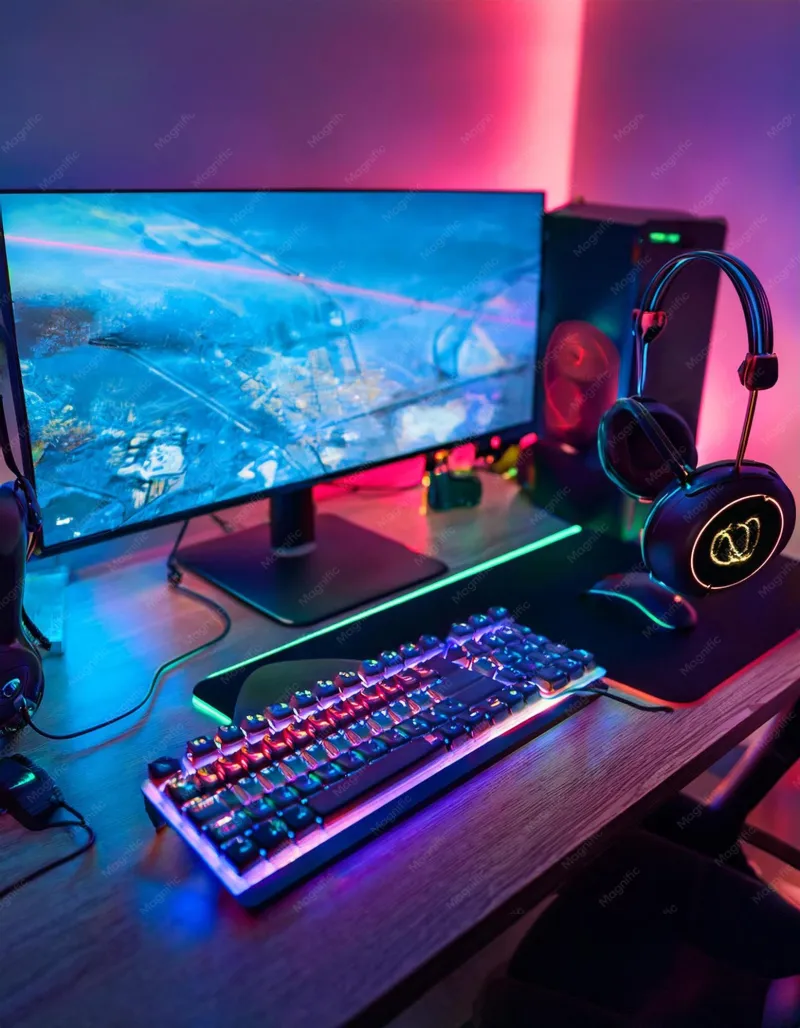
Photo: gaming headphones glowing setup desk controller, via img.freepik.com
Picture this: You're deep into a narrative RPG. The music swells. The mysterious villain leans in close and delivers what is clearly — based on every character's facial expression — an absolutely earth-shattering revelation. You lean forward too. You're invested. You're ready.
And then your $15 desktop speakers turn that monumental moment into something that sounds like a guy mumbling into a paper cup from across a Denny's.
Congratulations. You just got robbed.
Game audio is one of the most criminally underappreciated parts of the whole experience, and yet most casual players are out here treating it like an afterthought. Slap on whatever speakers came in the box, crank the volume to 40%, and call it a day. Meanwhile, developers are spending months — sometimes years — crafting sound landscapes that are supposed to make you feel things. Big things. Scary things. Triumphant, tear-jerking, controller-clutching things.
Your TV speakers are out here committing a crime against art, and nobody's pressing charges.
Why Sound Design Deserves Way More Credit Than It Gets
Here's something most people don't think about: game audio designers are basically architects, except instead of buildings they're constructing entire emotional environments out of thin air. The crunch of gravel under your character's boots tells you the ground is unstable. The way a horror game's ambient music subtly shifts pitch before an enemy appears is a warning your brain processes before your conscious mind does. The satisfying thwack of a weapon connecting with an enemy isn't just noise — it's the game physically rewarding you for good timing.
Strip all that out, or degrade it through garbage speakers, and you're essentially playing with one sense tied behind your back.
The gaming industry has quietly caught up to film in terms of audio sophistication. Games like The Last of Us, God of War, Alan Wake 2, and Red Dead Redemption 2 feature soundscapes that rival anything coming out of Hollywood. Dolby Atmos support, 3D positional audio, dynamic mixing that responds to gameplay — this stuff exists and it's genuinely impressive. But it only works if your setup can actually reproduce it.
The Most Common Audio Mistakes Casual Gamers Make
Let's run through the hall of shame, because there's a solid chance you're guilty of at least one of these.
Using TV speakers as your primary audio. Built-in TV speakers are designed to be thin and unobtrusive — literally built into a flat panel. They have almost no bass response and terrible stereo separation. Dialogue gets muddy. Atmospheric sound design collapses. Horror games become comedy.
Keeping dialogue, music, and effects all at default mix levels. Most modern games let you independently adjust these three audio channels. The default balance isn't always right for your specific setup, room, or hearing. Dig into the audio settings menu — it's usually right there — and bump dialogue up by 10-15%. You'll be amazed what you've been missing.
Playing without headphones during story-heavy sessions. This one's controversial but it's true. A decent pair of headphones will almost always outperform a mediocre speaker setup for narrative immersion. Closed-back headphones in particular create an intimacy with the game's audio that speakers in a reflective room just can't match.
Ignoring spatial audio settings. If your console or PC offers spatial audio options — and most do now — turn them on. Windows Sonic, Dolby Atmos for Headphones, DTS:X — these create a simulated surround sound effect that dramatically improves your ability to detect where in-game sounds are coming from. In multiplayer games, this is practically a competitive advantage. In single-player games, it's just straight-up more immersive.
Affordable Upgrades That Actually Move the Needle
Nobody's asking you to build a home theater. This is about practical improvements that won't require a second mortgage.
In the $30-60 range: A basic gaming headset with a closed-back design is your single biggest bang-for-buck upgrade. The HyperX Cloud Stinger and similar entry-level options have been praised for years for a reason. They're not audiophile equipment, but they are dramatically better than TV speakers for immersion.
In the $60-120 range: Wired stereo headphones from brands like Audio-Technica or Sony (the MDR-7506 is a legendary studio standard that costs around $100) will genuinely change how you experience game audio. Pair these with a basic USB DAC/amp if you're on PC and the improvement is noticeable.
In the $100-200 range: A 2.1 desktop speaker setup — two satellites and a subwoofer — brings back the physical, room-filling quality of audio that headphones can't replicate. The Logitech Z623 is a popular option in this space. You'll feel explosions again. Horror game bass drops will actually make your stomach drop. This is the upgrade that converts people.
The free upgrade everyone forgets: Seriously, just go into your game's audio settings right now. Adjust the mix. Enable spatial audio. Turn on any "night mode" or "dynamic range" options if you play late at night. These cost exactly nothing and take three minutes.
Jump Scares That Actually Jump, Twists That Actually Twist
Here's the real argument for caring about this stuff: the best moments in gaming are collaborative. Developers build the experience; you have to meet them halfway with a setup that can actually deliver it.
A jump scare in a horror game isn't just a visual. It's a sudden silence followed by a wall of sound at a frequency specifically chosen to trigger a physical startle response. Without the right audio reproduction, you just see a monster pop up. With it, you throw your controller across the room and have a story to tell at brunch.
A plot twist lands harder when the music underneath it is doing its job — when the shift in the score signals that the world of the game has fundamentally changed. When that music is coming through a speaker that can't reproduce the lower frequencies, the emotional cue is half gone before it reaches you.
Game developers are putting incredible work into these experiences. The least we can do is actually hear them.
Your speakers have been getting away with this for years. It's time to press charges.