Your Controller Is Lying to You (And Your Games Are Suffering For It)
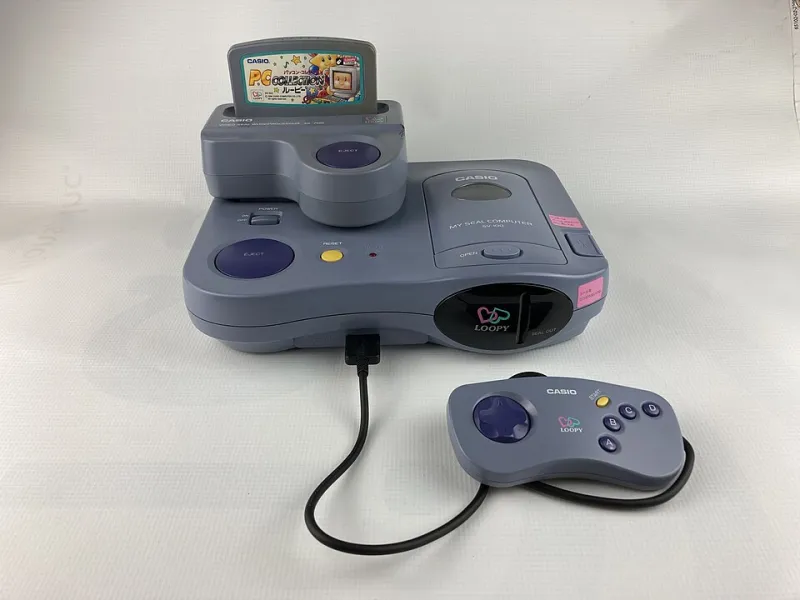
Photo: Soze.kayser, CC BY-SA 4.0, via Wikimedia Commons
Let's talk about the elephant in the room. Not the one sitting on your gaming chair—though, hey, no judgment—but the one you've been holding in your hands for the last four years. Your controller. That scuffed, thumb-polished, slightly-sticky-around-the-left-stick companion that has seen you through approximately one thousand rage quits and two console generations.
You love it. It fits your hands like a worn baseball glove. But here's the uncomfortable truth: it might be the reason you're not having fun anymore.
The Slow Creep of Controller Decay
Controllers don't die dramatically. They don't burst into flames or refuse to turn on one morning with a dramatic error code. They degrade slowly, sneakily, like a roommate who keeps eating your leftovers and always has a plausible excuse. The analog stick drift starts as a barely-there nudge in one direction. The A button that used to feel crisp now requires just a little more pressure. The triggers develop a soft, spongy resistance that makes every action feel like you're pressing buttons through a memory foam mattress.
The cruel part? Your brain adapts. You compensate without realizing it. You start overcorrecting your aim. You press buttons harder. You assume the game's controls are just "a little off" or that you've lost your edge. You haven't lost your edge—your gear has lost its edge for you.
This is what hardware people call "input degradation," and what the rest of us call "why does my character keep walking into walls when I'm not touching anything."
What's Actually Breaking Down (And Why It Matters)
Modern controllers are mechanical devices with a finite lifespan. The analog sticks on most gamepads use potentiometers—tiny resistive sensors that wear down with use. Once they start going, you get drift: that infuriating phenomenon where your in-game camera slowly pans toward the sky like it's looking for God, even when your thumbs are nowhere near the sticks.
Buttons use physical membranes or dome switches that compress over time, raising the actuation force required to register a press. What once felt snappy starts feeling like pressing a button through a layer of Jell-O. Triggers often have their own spring mechanisms that fatigue, changing the pull weight and response curve in ways that subtly wreck your muscle memory.
None of this is catastrophic on its own. All of it together? It's death by a thousand tiny frustrations, and it's absolutely ruining games you might otherwise love.
The Budget Refresh That'll Actually Change Your Gaming Life
Here's the good news: you don't need to drop $200 on an elite controller to fix this. The upgrade landscape for gamepads in 2024 is genuinely wild in the best possible way.
The PowerA Advantage Wired Controller hovers around $35-$45 and is one of the most slept-on controllers in the game. It's licensed by Microsoft, works on Xbox and PC, and the build quality punches well above its price tag. The sticks feel tight, the buttons are responsive, and there's zero drift drama right out of the box.
The 8BitDo Ultimate series is another revelation for anyone who hasn't tried it. Starting around $45, these controllers feature hall effect analog sticks—a magnetic sensor design that essentially doesn't wear out the same way traditional potentiometers do. If stick drift has been your nemesis, hall effect is your hero origin story.
For PlayStation fans on a budget, the Nacon Compact Controller is a solid $30 option that handles better than its price suggests, especially for folks with smaller hands who find the DualSense a little wide.
And if you're willing to spend closer to $70? The Razer Wolverine V2 and Turtle Beach Recon Cloud both offer legitimate performance upgrades—shorter trigger travel, textured grips, and button layouts that make fast-paced games feel noticeably more responsive.
The Rediscovery Effect Is Real
Here's the part that sounds dramatic but is completely true: swapping out a degraded controller for a fresh one can make games you'd mentally written off feel brand new.
That platformer you quit because the jumps felt "inconsistent"? Might have been your triggers. That shooter you abandoned because your aim felt "off"? Could have been stick drift you'd learned to ignore. The open-world RPG you put down because the controls felt "sluggish"? Sometimes sluggish controls are just worn-out hardware pretending to be a game design problem.
It's a little humbling to realize a $40 piece of plastic can reignite your enthusiasm for games you thought you'd outgrown. But it's also kind of liberating. The joy was there the whole time. Your gear was just getting in the way.
A Quick Self-Assessment Before You Buy
Not sure if your controller is actually the problem? Run this quick check:
- Drift test: Put your controller down, open any game with a free camera, and don't touch the sticks. Does the camera move? Drift confirmed.
- Button test: In a game with precise timing (rhythm games are great for this), notice if you're mashing inputs harder than you used to. That's button fatigue.
- Trigger test: In a racing or shooting game, pull each trigger slowly and see if the input registers smoothly or in a sudden jump. Jumpy triggers mean worn mechanisms.
If you hit two or more of those, your controller is cooked. Lovingly, respectfully cooked—but cooked.
Don't Blame the Game Until You've Blamed the Gear
Gaming culture has a habit of blaming everything except the obvious. Bad internet, bad teammates, bad game design, bad luck. But sometimes the answer is refreshingly simple: the thing in your hands is just old.
Treating yourself to a new controller isn't an extravagance. It's basic maintenance. You wouldn't drive a car with worn-out brake pads and blame traffic for every close call. Your gaming setup deserves the same logic.
So before you uninstall that game you've convinced yourself you no longer enjoy, give it one more shot—with a controller that isn't secretly working against you. You might be surprised what you rediscover.