Same Couch, Same Room, Way More Fun: The Local Multiplayer Revival Nobody Saw Coming
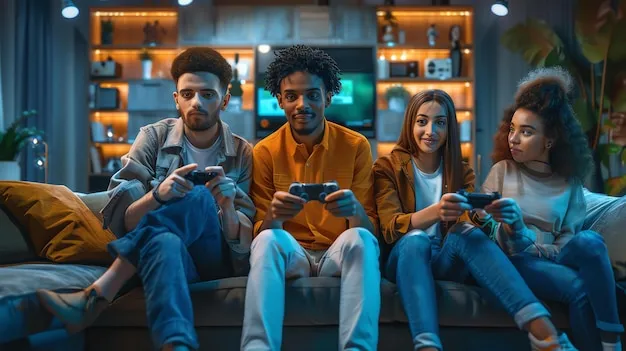
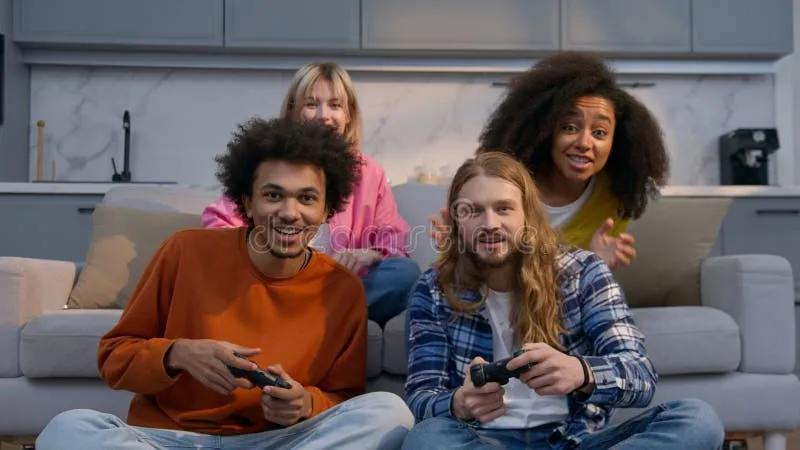
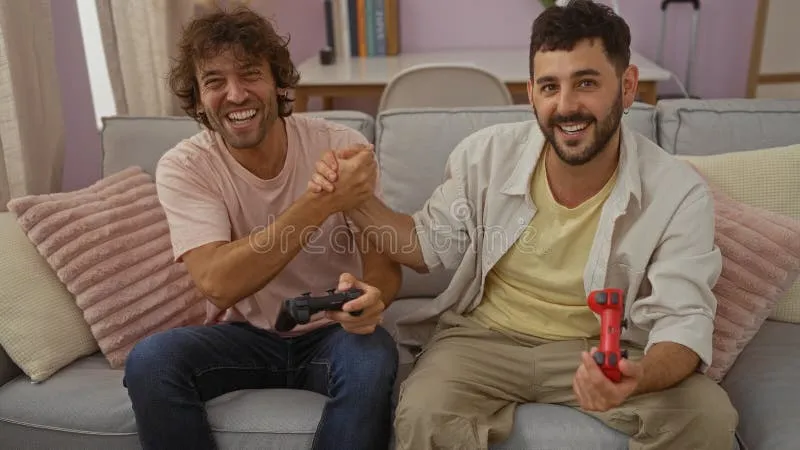
Photo: friends laughing playing video games together on couch living room, via img.freepik.com
Somewhere between the fifteenth true-crime documentary auto-playing on the TV and the third hour of mindless Instagram scrolling, a generation of gamers collectively asked themselves a dangerous question: what if we just... played a game together? In person?
Wild, right?
And yet here we are. Local multiplayer gaming — the kind where you can physically shove your friend when they steal your star in Mario Party — is having a full-blown renaissance. The same industry analysts who predicted gaming's future was entirely solo, streamed, and socially mediated through a fiber-optic cable are quietly updating their forecasts. Couch co-op didn't die. It just took a nap. And now it's back, it's louder than ever, and it brought snacks.
How Did We Get Here?
Let's be honest: online multiplayer was supposed to make local play obsolete. Why squeeze four people onto a loveseat when you could connect with players from Portland to Pittsburgh without leaving your bedroom? For a while, that logic held. Online gaming exploded. LAN parties became a punchline. The second controller gathered dust.
But something funny happened on the way to the fully digital future. People got tired. Not tired of gaming — never that — but tired of the particular flavor of exhaustion that comes with staring at a screen alone, interacting with usernames instead of faces, and spending more time in matchmaking lobbies than actually playing.
Gen Z and millennials, the two demographics who were supposedly born for digital-only existence, started craving something with a little more texture. More friction. More humanity. More of your roommate yelling "THAT WAS MY COIN" directly into your face.
Enter the couch co-op comeback.
The Games That Are Fueling the Fire
The resurgence isn't happening in a vacuum — developers have been quietly building an incredible library of same-room experiences that rival anything you'll find in online-only gaming.
It Takes Two (2021, Hazelight Studios) is practically the poster child for the movement. A cooperative platformer that literally requires two players and zero online connectivity, it won Game of the Year and introduced millions of couples, siblings, and roommates to the specific joy — and specific stress — of having to work together or fail together. No blaming lag. No blaming a random teammate. Just you, the person next to you, and a shared problem to solve.
Overcooked! 2 remains a staple at game nights across the country, mostly because nothing tests a friendship like trying to chop vegetables and pass plates in a kitchen that is, inexplicably, on a hot air balloon. The screaming alone is worth the $25.
Teenage Mutant Ninja Turtles: Shredder's Revenge tapped directly into nostalgia while delivering a genuinely excellent beat-em-up that plays best with a full couch of four. Cuphead rewards two-player masochism with gorgeous animation. Unravel Two is surprisingly wholesome. And Super Smash Bros. Ultimate never needed a revival because it never actually left — it just kept quietly being the reason people bought a Switch.
The common thread? These games are designed for the room. They're designed for reaction, for laughter, for the moment someone screams because they didn't see that trap coming.
Real People, Real Couches, Real Chaos
Talk to actual gaming groups across the US and you'll hear the same story told a dozen different ways.
Marcus, 28, from Austin, Texas, describes how his friend group pivoted away from their online Call of Duty nights after pandemic restrictions lifted. "We realized we'd been playing together online for two years but hadn't actually hung out in forever," he says. "Now we do a game night every other Friday. Someone brings food, someone brings a new game, and we don't leave until at least two arguments have happened and been resolved."
In Chicago, a group of college friends in their late twenties have turned local multiplayer into a rotating social ritual. "We tried doing a book club," admits Priya, 27. "Nobody read the book. Now we play Jackbox games and it's honestly better for our friendships."
These aren't isolated stories. They're a pattern — and the numbers back it up. Nintendo has leaned hard into local play as a core Switch selling point, and it's paid off. Party game sales spike every holiday season. Game nights are increasingly a fixture of social calendars in a way they simply weren't five years ago.
Why It Hits Different Than Online Play
There's a reason couch co-op feels distinct from its online counterpart, and it's not just nostalgia. It's neurological.
When you're in the same physical space as another person, you're sharing more than a screen. You're sharing body language, energy, laughter in real time. You can read their face when they're about to betray you in a strategy game. You can high-five after a clutch win without typing out a GG. The feedback loop is immediate, embodied, and genuinely social in a way that a Discord voice channel, for all its convenience, just can't replicate.
In a media landscape saturated with passive consumption — streaming, scrolling, watching other people play games on Twitch — actually doing something interactive with the people physically around you has started to feel almost radical. It's screen time, technically, but it's screen time with purpose, with laughter, and with someone stealing your controller when you least expect it.
The Vibe Is the Point
Here's the thing that no tech prediction accounted for: sometimes the point of playing a game isn't to optimize, compete, or achieve. Sometimes the point is the vibe. The chaos of four people trying to navigate a co-op puzzle. The betrayal arc of a single Monopoly session. The completely unhinged energy of a Jackbox party pack at 11pm.
Couch co-op, at its best, isn't really about the game. It's about the room. The people in it. The shared experience of failing and winning and arguing about whether that was actually a fair death.
The algorithms can't sell you that. The matchmaking queue can't replicate it. And no amount of fiber-optic speed can substitute for the very human experience of sitting next to someone, handing them a controller, and saying: "Okay, you're going to hate this, but trust me, it's fun."
The couch co-op comeback isn't a trend. It's a correction. And honestly? It's about time.