Stick Drift Is Stealing Your Fun — And Nobody's Pretending to Fix It
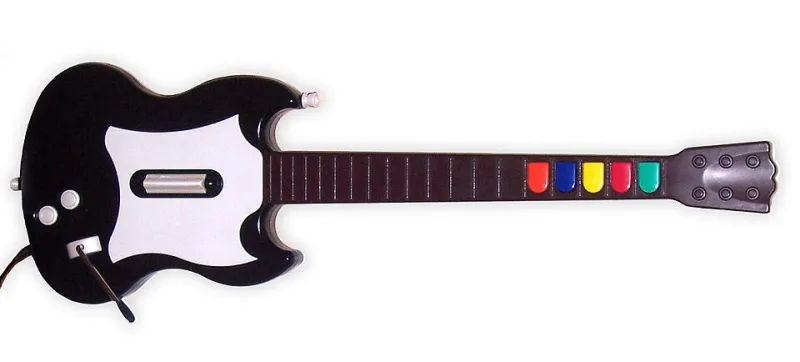
Photo: derivative work: Masem (talk) Guitar-hero-controller.jpg: Original uploader was Y2kcrazyjoker4 at en.wikipedia, Public domain, via Wikimedia Commons
Picture this: you're deep in a boss fight, health bar clinging on by a pixel, and your character just... starts drifting left. You didn't touch anything. You're holding your breath. Your thumbs are completely still. And yet your on-screen avatar is casually wandering into a lava pit like they've got somewhere to be.
Welcome to the joy of joystick drift — gaming's most universally shared, most aggressively ignored design failure. If you've owned a controller in the last decade, there's a genuinely solid chance you've already lost your mind over this exact problem. You are not alone. You are, in fact, part of a massive, extremely frustrated club with millions of members and absolutely zero perks.
So What Actually Is Drift, and Why Does It Happen?
Here's the short version: the analog sticks on your controller use tiny potentiometers — little components that measure physical position and translate it into electrical signals. When you push the stick left, the potentiometer registers that. When you let go, it's supposed to register nothing. The problem is that these components wear out. The plastic and metal parts grind against each other thousands of times per gaming session, and over time, they start sending phantom signals even when the stick is at rest.
The result? Your character drifts. Your camera spins. Your carefully aimed shot goes somewhere completely unhinged.
This isn't a freak accident. It's physics. The materials used in most mass-market controllers are genuinely not built to survive the kind of abuse a dedicated gamer dishes out. A single enthusiastic weekend of Elden Ring can put more stress on those little components than some manufacturers seem to have anticipated — or at least, more than they're willing to publicly acknowledge.
The Hall Effect: A Fix That Already Exists (You're Welcome)
Here's the part that makes gamers absolutely feral: the solution to drift has existed for years. Hall effect sensors use magnets instead of physical contact to detect stick position. No grinding. No wear. No phantom left-drift sending your character into a wall at 2 AM.
Some third-party controllers — like the Gulikit KingKong and certain models from 8BitDo — already use hall effect sensors. They work beautifully. They last significantly longer. They're not even dramatically more expensive to manufacture.
And yet, the major platform holders have been... let's say, thoughtfully unhurried about adopting them. Nintendo's Joy-Cons became so notorious for drift that a class-action lawsuit was filed in the US. Sony's DualSense controllers, celebrated at launch for their haptic feedback wizardry, developed a drift reputation almost immediately. Microsoft's Xbox controllers have their own drift stories, though perhaps slightly less dramatic than the Nintendo saga.
The cynical read — and honestly, it's hard not to go there — is that selling replacement controllers and charging for repairs is a tidy little revenue stream. Nintendo was reportedly repairing Joy-Cons for free at one point under public pressure, but the underlying design didn't change. The drift kept coming.
The Underground Repair Scene Is Absolutely Thriving
If the corporations aren't going to fix it, the people will. And they have.
On YouTube, Reddit, and TikTok, a genuinely impressive ecosystem of DIY repair content has exploded. Channels dedicated entirely to controller repair have racked up millions of views. Subreddits like r/consolerepair are full of everyday people posting their before-and-after victories with the quiet pride of someone who just beat a FromSoftware game without a guide.
The repair kits are cheap. A replacement analog stick module for a DualSense runs somewhere in the $5-$15 range on Amazon. A basic soldering iron setup costs about as much as a single AAA game. And the tutorials? Shockingly good. Patient, detailed, sometimes even funny.
There's something genuinely wonderful about this community. It's people refusing to accept that a $70 controller should be disposable. It's also, let's be honest, kind of a power move — sitting at your workbench, soldering iron in hand, basically telling a multi-billion dollar corporation that you're handling this yourself, thanks.
iFixit, the repair bible of the internet, has published detailed teardown guides for basically every major controller on the market. Right to Repair advocates have pointed to gaming controllers as a perfect example of why consumers deserve access to affordable parts and documentation. Some states are already pushing legislation that would make it easier for people to repair their own devices — and gaming gear is part of that conversation.
The Rage Is Real, But So Is the Resourcefulness
Spend five minutes in any gaming forum thread about drift and you'll find a spectrum of reactions. There's grief ("I just bought this three months ago"), fury ("this is my fourth Joy-Con"), dark humor ("my character walks into walls but honestly same"), and then, eventually, determination.
The determination is the good part.
Because while it would be genuinely nice if manufacturers shipped controllers that didn't start hallucinating stick inputs after a year of normal use, the fact that so many gamers have learned to fix their own hardware is quietly kind of cool. The barrier to entry for basic controller repair is lower than most people think. You don't need an engineering degree. You need a YouTube tutorial, a screwdriver set, and about forty-five minutes of patience.
Some folks have gone further, modding their controllers with hall effect replacements themselves — essentially performing surgery to install the better technology the manufacturer chose not to include. These aren't professional techs. They're regular gamers who got tired of waiting and decided to level up in a completely different way.
What Should Actually Happen
In a perfect world, the major platform holders would adopt hall effect sensors across the board, price controllers fairly, and stop treating drift like a mystery rather than an engineering choice. Some are moving in that direction — slowly, and arguably only because the community pressure has been loud and sustained.
In the meantime, a few practical notes: compressed air can sometimes delay drift on mildly affected sticks. Contact cleaner spray (the electronics-safe kind) is a slightly more aggressive intervention that works for some people. And if you're ready to actually fix the thing properly, the replacement module route is genuinely not as scary as it sounds.
The drift epidemic is frustrating. It's also, in a strange way, a testament to how much people love gaming — enough to learn soldering rather than quit. Enough to build communities around fixing things. Enough to refuse to let a wobbly potentiometer end the fun.
Your controller might be broken. Your determination, apparently, is not.
Got a drift horror story or a repair win you're proud of? The iTox Fun community wants to hear it — because nothing bonds gamers faster than shared suffering and hard-won victories.