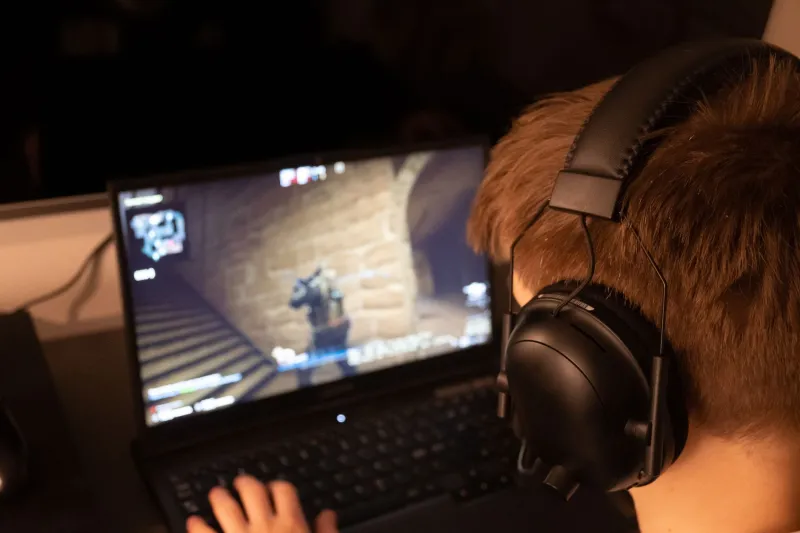
Goodbye, Loading Screen: The Surprisingly Emotional Ritual of Deleting Games You Never Finished

You've been staring at it for weeks. Maybe months. That little icon sitting there on your hard drive like a passive-aggressive houseguest who never unpacked their bags. You bought it during a Steam sale for $4.99, launched it exactly once, and now it's just... there. Occupying 47 gigabytes of your life.
And then one day, you finally right-click. You hover over 'Uninstall.' And suddenly — against all rational logic — it feels like you're about to do something deeply, profoundly wrong.
Welcome to the Great Game Uninstall. Population: every gamer who's ever needed storage space and found themselves oddly emotional about freeing it up.
It's Not Just a File — It's a Promise You Made to Yourself
Here's the thing nobody talks about when you download a game: you're not just installing software. You're making a little silent promise to yourself. I will play this. I will see what happens. I will be the kind of person who finishes things.
So when you finally hit delete, you're not just removing a folder from your SSD. You're officially, permanently, admitting that you are not going to become a Destiny 2 main. You are never going to finish that open-world RPG with the 200-hour story. You are not, it turns out, someone who enjoys city-building simulators at 1 AM on a Tuesday.
That's a lot of self-reckoning for a right-click menu.
Psychologists who study digital behavior have a name for this kind of attachment: the endowment effect. Once you own something — even something digital, even something you paid three dollars for — your brain assigns it more value than it actually has. Uninstalling isn't just reclaiming disk space. It's actively working against your own cognitive wiring. No wonder it stings.
The FOMO Is Real and It Has Gigabytes
Let's be honest about what's really happening when you hesitate over that uninstall button: you're terrified you'll delete it and then immediately want to play it. This is a completely irrational fear that has happened to literally every gamer at least once, and it has shaped our entire relationship with storage management.
You will delete Hollow Knight. You will wake up three weeks later thinking, wait, did I ever beat the Grimm Troupe DLC? You will reinstall it. You will play for 20 minutes. You will uninstall it again. The cycle is eternal.
Digital libraries have made this psychological loop so much worse. Back when games lived on physical discs, you could only own what fit on your shelf. There was a natural cap on commitment. Now? Your Steam library can hit 400 titles before you even notice, and each one is a tiny dormant obligation waiting to guilt-trip you from the depths of your account page.
Storage anxiety is genuinely a thing. The perpetual low-storage notification on your gaming PC or console isn't just a technical inconvenience — it's a constant reminder that you've overcommitted and underdelivered on your own entertainment promises. That's a lot of pressure for what's supposed to be fun.
Why Never Playing It Felt Fine — But Deleting It Feels Final
Here's the wild part: most of us are completely comfortable not playing a game for years. It just sits there. No problem. We scroll past it every time we boot up. We feel mildly guilty for about half a second and then load up whatever we were already playing. It's fine. It's whatever.
But uninstalling? That's different. That's a declaration.
Not playing a game keeps the dream alive. Uninstalling it kills the dream. And there's something about the permanence of deletion — even when you know deep down you could just reinstall it in ten minutes — that triggers a very human aversion to closing doors.
This is why uninstalling a game you never played hits harder than never playing it in the first place. The game existing on your drive was a standing invitation. Removing it is RSVPing 'no' to your own potential fun. It's you, officially, telling yourself: this version of you who plays this game is not happening.
Heavy stuff for a Thursday night.
The Relief Is Real Too — And It's Underrated
Okay, but let's flip this around, because the uninstall experience isn't only guilt and nostalgia. There's also — and this doesn't get nearly enough credit — a genuinely euphoric sense of relief that comes with clearing out your library.
Ask anyone who's done a serious gaming purge. They'll describe it the same way people describe cleaning out a closet: chaotic at first, weirdly emotional in the middle, and then spectacular at the end. Suddenly your console dashboard isn't a wall of shame. Your PC's game folder is manageable. You can actually see the games you want to play without scrolling past twelve titles you bought in 2019 and opened once.
The Great Uninstall, done right, is basically a reset button on your relationship with gaming. It forces you to ask: what do I actually want to play right now? Not what I thought I'd want to play six months ago. Not what was on sale. What do I, today, actually want to load up?
That question is surprisingly hard to answer when your library is 300 games deep. Deleting the noise makes the signal a whole lot clearer.
How to Make Peace With the Delete Button
If you're gearing up for your own Great Uninstall and you want to do it without a full existential crisis, here's the iTox Fun approach: treat it like a ritual, not a chore.
Give yourself permission to acknowledge the game before you delete it. Sounds ridiculous. Works anyway. Load it up, spend five minutes actually looking at it, and decide consciously: is this something I genuinely want to play, or something I feel like I should want to play? If it's the latter, it's gone. No guilt. You're not a worse person for not finishing a 90-hour JRPG you bought on impulse.
Also — and this is important — remember that digital games aren't going anywhere. Unlike that copy of Battletoads you traded in for store credit in 1995, most of your library exists in the cloud, waiting patiently for the day you actually want to return. Uninstalling isn't forever. It's just honesty.
The Uninstall Is Part of the Game
Gaming culture talks endlessly about what we play, how we play, and how long we play. But the moments between games — the management, the decisions, the storage juggling — those are part of the experience too. The Great Uninstall is its own kind of gameplay, complete with stakes, emotions, and occasional boss-level regret.
So next time you're hovering over that button, feeling weirdly sad about deleting a game you haven't touched since the Obama administration — just know you're not alone. Every gamer has been there. Every gamer has felt it.
Hit delete. Breathe. Go play something you actually love.
Your storage drive will thank you. And honestly? So will your brain.