Joysticks in the Junkyard: The Dirty Secret Behind Every Dead Controller
Let's set the scene. You're three hours into a clutch gaming session, vibes immaculate, snacks within reach, and then — nothing. The left stick starts drifting like it's auditioning for a NASCAR documentary. You rage-wiggle it. You blow into it like it's a vintage NES cartridge. You YouTube a fix at 1 a.m. and strip one screw before giving up entirely.
And just like that, another controller joins the great peripheral graveyard.
This little tragedy plays out millions of times a year across American living rooms, dorm rooms, and basement setups. But here's what we don't talk about nearly enough: where does that broken controller actually go? And more uncomfortably — why does it seem to die so fast in the first place?
The Numbers Are Kind of Horrifying
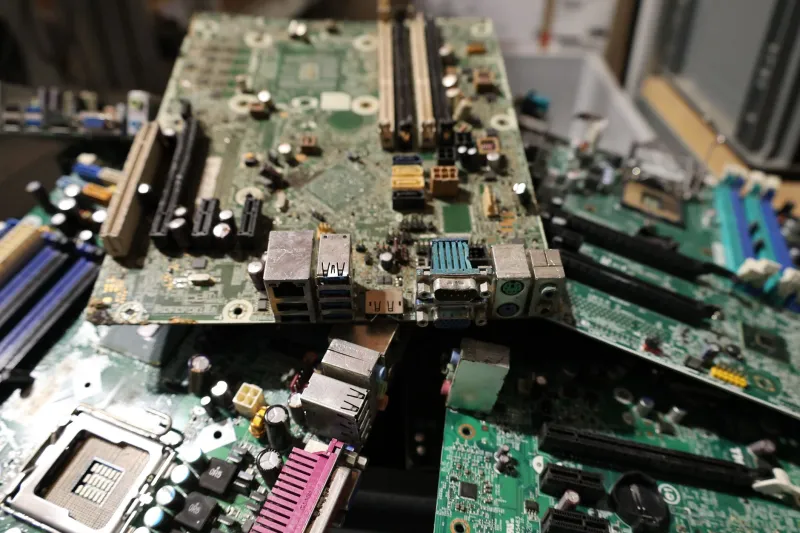
The global e-waste problem is massive — we're talking roughly 62 million metric tons of electronic waste generated worldwide in 2022 alone, according to the UN's Global E-waste Monitor. Gaming peripherals are a small but scrappy contributor to that pile. The Consumer Technology Association estimates that Americans alone replace hundreds of millions of electronic devices annually, and gaming gear — controllers, headsets, charging docks, motion sensors — is increasingly part of that churn.
Here's the kicker: most of it doesn't get recycled. The EPA estimates that only about 17% of e-waste globally gets properly handled. The rest ends up in landfills, informal recycling operations overseas, or stuffed in a closet until someone's mom throws a garage sale.
Controllers are particularly tricky because they're a cocktail of plastics, circuit boards, lithium batteries, rubber membranes, and tiny motors — materials that require specialized processing to recycle responsibly. Most municipal recycling programs won't touch them. Most people don't know where to take them. And so the junk drawer fills up.
So Why Do They Break So Fast?
This is where things get a little spicy.
Analog sticks — specifically the potentiometers that register their movement — are typically rated for somewhere between 500,000 and 2 million input cycles depending on the manufacturer and component quality. That sounds like a lot until you realize that an average gamer might log 200+ hours on a controller in a year, and every tiny flick of the stick counts as inputs. Heavy players can burn through that lifespan in 18 months or less.
E-waste consultants and repair advocates have pointed out for years that the components used in mass-market controllers are often sourced for cost efficiency rather than durability. iFixit, the beloved repair-everything organization, has given multiple major controllers low repairability scores — meaning that when something breaks, it's designed in a way that makes fixing it a nightmare for the average person.
Is that deliberate? That's the thorny question. Manufacturers aren't exactly holding press conferences to announce "yes, we made this to fail." But critics in the right-to-repair movement argue that design choices — proprietary screws, glued-in batteries, non-standard components — make repair inconvenient enough that replacement becomes the path of least resistance. Which, conveniently, means you buy another one.
Sony, Microsoft, and Nintendo have all faced public pressure and even legal scrutiny over stick drift in recent years. Nintendo settled a class-action lawsuit over Joy-Con drift. The conversation is getting louder. The hardware hasn't changed that dramatically.
The Repair Revolution Is Real (And Kind of Fun)
Here's the good news: a genuinely passionate community of gamers has decided to fight back, and they're doing it with soldering irons and stubborn optimism.
The right-to-repair movement has gained serious traction in the US, with several states passing or considering legislation that would require manufacturers to make repair tools and parts more accessible. On a grassroots level, YouTube channels dedicated to controller repair have racked up millions of views. iFixit sells replacement analog sticks for under $10. Hall effect joystick mods — which swap out the failure-prone potentiometers for magnetic sensors that theoretically never drift — have become a cottage industry.
For the uninitiated: Hall effect sticks use magnets instead of physical contact points to register movement, which means there's no friction wear over time. Several third-party controllers now ship with them standard, and the modding community has developed kits for popular first-party controllers. It takes some patience and a steady hand, but the internet will absolutely walk you through it.
If DIY repair sounds like too much, GameStop, Best Buy's Geek Squad, and a growing number of independent repair shops now offer controller repair services. Prices vary, but getting a stick replaced professionally is almost always cheaper than buying a new $70+ controller.
What You Can Actually Do With a Dead Controller
Okay, so your controller is toast and you're not feeling the repair route. What now?
Don't trash it. Seriously. Lithium batteries in landfills are a fire hazard and a leaching nightmare.
- Best Buy's e-waste recycling program accepts a wide range of electronics, including gaming peripherals, at most store locations — no purchase required.
- Call2Recycle has drop-off locations nationwide specifically for battery-containing devices.
- Staples runs an electronics recycling program that's easy to use and free for most items.
- Local GameStop locations sometimes accept trade-ins on broken controllers for store credit, though policies vary.
- Schools and makerspaces — busted controllers can become fantastic teaching tools for electronics classes. Reach out to a local school or community workshop before you toss it.
If the controller is mostly functional with a cosmetic issue or minor problem, consider donating it. Organizations like PCs for People and Human-I-T refurbish electronics for underserved communities, and some local shelters and youth centers actively seek gaming gear.
The Bigger Picture Nobody Wants to Paint
The gaming industry loves to position itself as forward-thinking, innovative, and community-oriented. And in a lot of ways, it genuinely is. But the environmental cost of the hardware cycle — new console generation, new controller standard, incompatible accessories, repeat — rarely makes it into the marketing materials.
The average American household has multiple gaming peripherals. A lot of those will fail within a few years. Most won't be recycled properly. And as gaming grows — it's now a larger entertainment industry than movies and music combined — that footprint grows with it.
The fun doesn't have to stop. But maybe it's worth knowing what the fun costs, beyond the sticker price. Because the junkyard is getting crowded, and it turns out your old DualShock 3 is still in there, slowly leaching into the ground, completely unbothered.
Repair when you can. Recycle when you can't. And maybe — just maybe — yell at your platform holder of choice to use better joystick components.
They can hear you. They just need to hear it louder.